What is the process of extrusion?
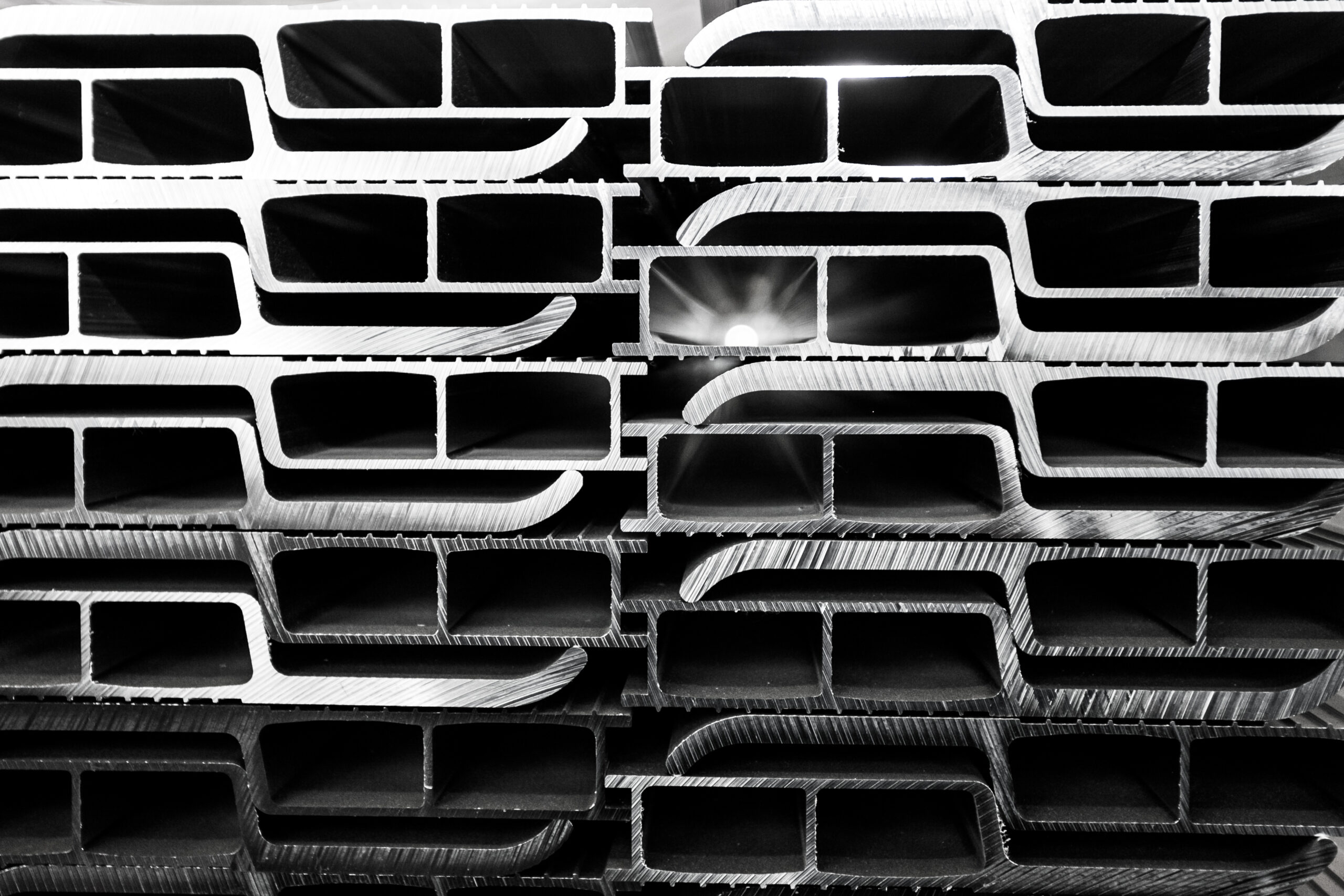
Extrusion is a widely used manufacturing process that shapes material by forcing it through a specially designed die to create a continuous profile. In simple terms, it works much like squeezing toothpaste from a tube—except with metal and under extreme pressure.
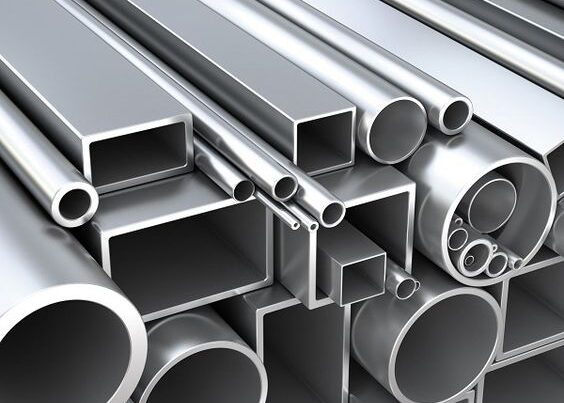
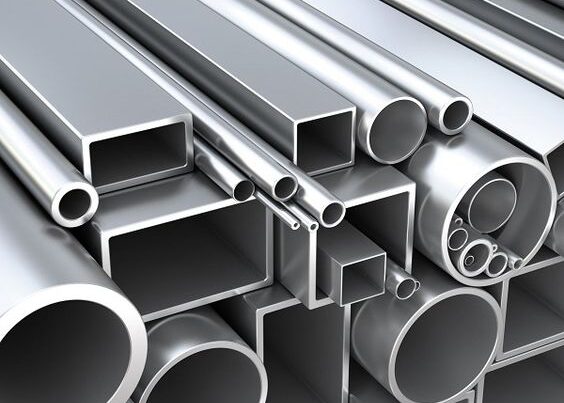
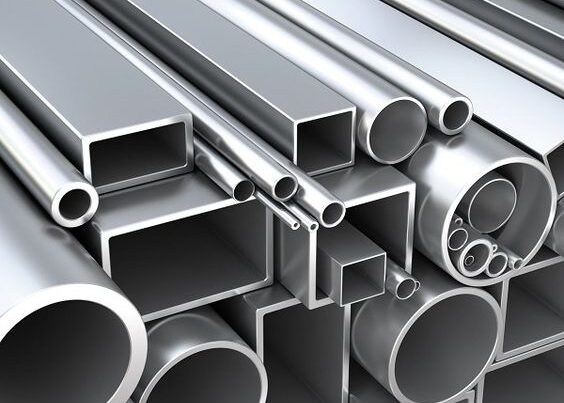
Although extrusion can apply to various materials, aluminium extrusion remains one of the most common due to aluminium’s lightweight, durable, and highly malleable properties. As a result, industries such as construction, automotive, and electronics rely heavily on this process for consistent and complex components.
At Love Aluminium, the extrusion process forms the backbone of delivering bespoke aluminium solutions tailored to specific project requirements.
Understanding the aluminium extrusion process
The aluminium extrusion process begins with a solid cylindrical block of aluminium known as a billet. Manufacturers heat this billet to a high temperature—typically between 350°C and 500°C—so it becomes soft and workable without melting.
Once heated, a powerful hydraulic ram pushes the billet through a steel die. This die determines the final shape of the aluminium profile, meaning the extruded product will mirror the die’s cross-section exactly.
Because the process uses compressive force, aluminium can form intricate and precise shapes without cracking. This makes extrusion both efficient and highly versatile.
Step-by-step: how extrusion works
To fully understand what the process of extrusion involves, it helps to break it down into clear stages:
1. Design and die creation
First, engineers design the required profile. At Love Aluminium, a CAD team works closely with clients to ensure the design is both functional and suitable for extrusion. Once finalised, a custom die is manufactured to match the desired shape.
2. Heating the billet
Next, the aluminium billet is heated to make it pliable. This step is crucial because it allows the metal to flow smoothly through the die without breaking or losing integrity.
3. Extrusion (forming the shape)
The heated billet is placed into a press, and a hydraulic ram applies significant pressure. As the billet is forced through the die, it emerges as a long piece with a consistent cross-section—this is the extrusion itself.
4. Cooling and cutting
As the profile exits the die, it is rapidly cooled to solidify its shape. It is then cut to the required lengths based on project specifications.
5. Stretching and straightening
To ensure accuracy, the extrusion undergoes stretching. This removes any distortions and aligns the profile precisely with the intended design.
6. Finishing processes
Finally, the extrusion may be heat-treated, anodised, or powder-coated to enhance strength, appearance, and corrosion resistance.
Types of extrusion processes
There are two primary types of extrusion used in aluminium manufacturing:
Direct extrusion
This is the most common method. The billet moves in the same direction as the ram, pushing the material through a stationary die.
Indirect extrusion
In this method, the die moves towards the billet instead. Although less common, it reduces friction and can improve efficiency in certain applications.
Both methods achieve the same goal, but the choice depends on the project requirements and production setup.
Why extrusion is so widely used
Extrusion plays a vital role in modern manufacturing, and for good reason. Firstly, it allows for highly complex cross-sectional designs that would be difficult or impossible to achieve with other methods.
Secondly, it offers excellent material efficiency. Because the process produces continuous lengths, there is minimal waste compared to other fabrication techniques.
Additionally, aluminium extrusion provides consistent quality and dimensional accuracy. This reliability is essential in industries where precision matters, such as engineering and construction.
Finally, aluminium itself brings added advantages. It is lightweight, corrosion-resistant, and fully recyclable, making it a sustainable choice for long-term applications.
Applications of aluminium extrusion
Because of its versatility, aluminium extrusion is used across a wide range of industries. For example, it is commonly found in:
-
Window and door frames
-
Structural components in buildings
-
Automotive parts
-
Electrical enclosures
-
Signage and display systems
At Love Aluminium, extrusion services support sectors including automotive, lighting, manufacturing, and signage. This demonstrates just how adaptable the process is across different industries.
Benefits of working with extrusion specialists
Choosing an experienced extrusion partner can make a significant difference in both product quality and efficiency. A specialist team not only ensures precise manufacturing but also supports design optimisation from the outset.
For instance, Love Aluminium provides expert guidance during the design phase, helping clients create profiles that are both functional and cost-effective to produce. This collaborative approach reduces errors, saves time, and improves overall project outcomes.
If you want to explore more about aluminium extrusion services, visit our website.
For further technical reading on extrusion principles, you can also refer to this source.
Common challenges in the extrusion process
Although extrusion is highly efficient, it does come with challenges. Temperature control is critical; if the billet is too hot or too cold, the final product may not meet quality standards.
Similarly, die design plays a crucial role. Poorly designed dies can lead to defects, uneven flow, or structural weaknesses in the extrusion.
However, experienced manufacturers mitigate these issues through careful planning, advanced equipment, and rigorous quality control procedures.
The future of aluminium extrusion
As industries continue to prioritise sustainability and efficiency, aluminium extrusion is expected to grow in importance. Its recyclability and energy efficiency align well with modern environmental goals.
Moreover, advancements in technology—such as improved simulation software and automated production lines—are making the process even more precise and cost-effective.
This means businesses can achieve higher-quality results while reducing waste and production time.
Get in touch
If you’re considering aluminium extrusion for your next project, working with a trusted specialist is key. Love Aluminium offers tailored solutions, expert design support, and high-quality manufacturing to meet a wide range of requirements.
Whether you need a simple profile or a complex bespoke design, our team can guide you through every stage of the extrusion process.